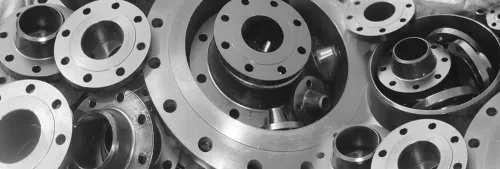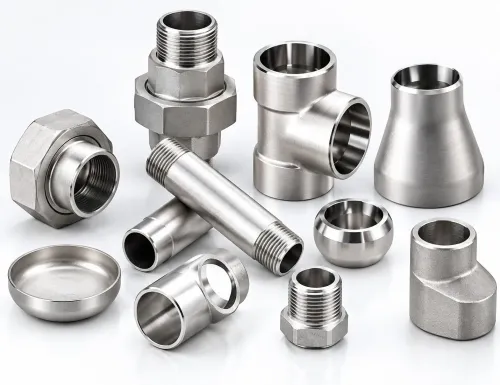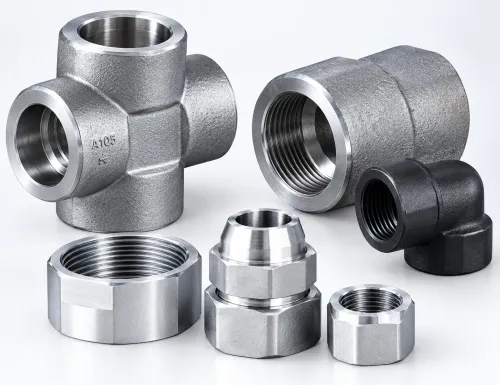
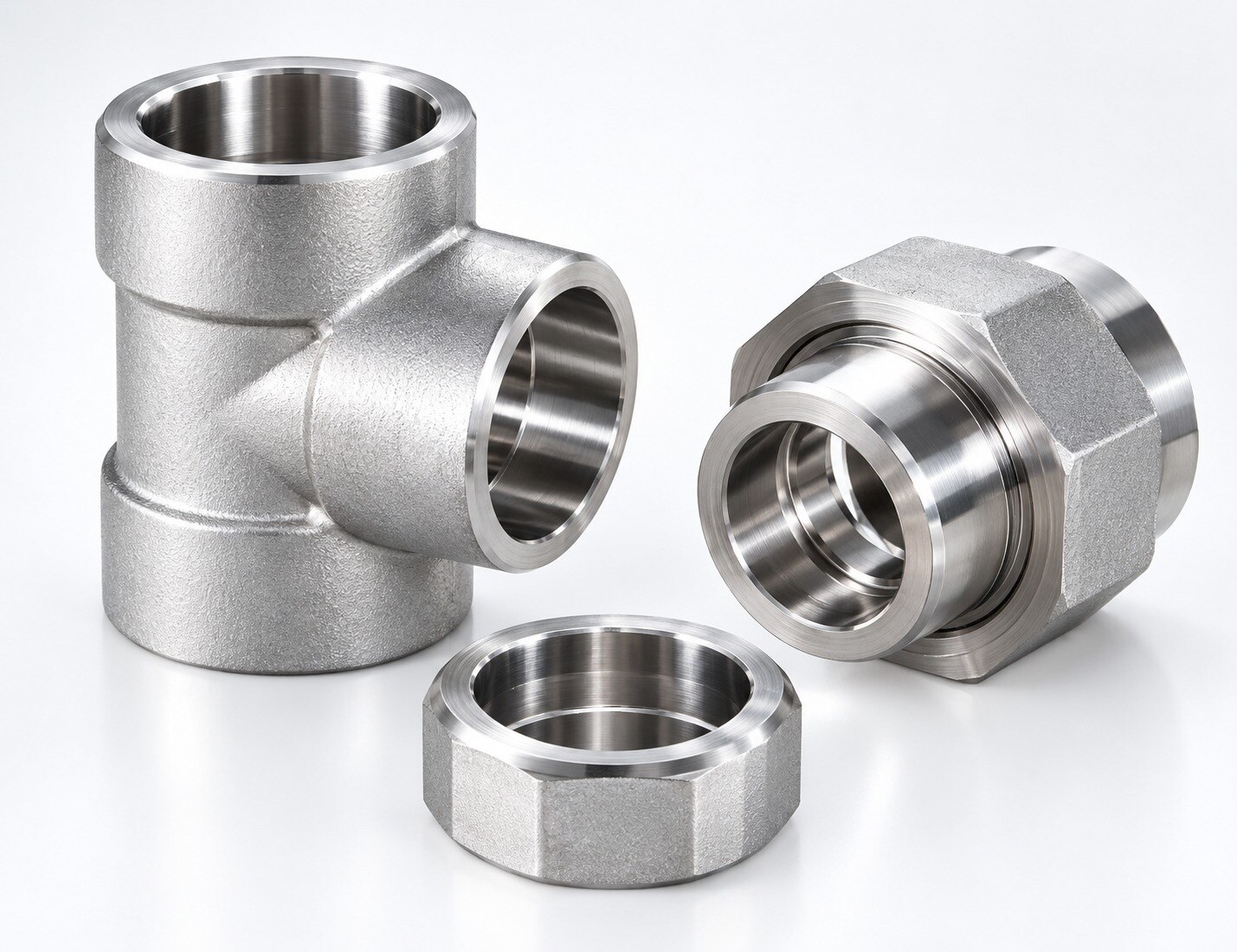
A leaking socket-weld joint may be caused by the weld, but it may also originate in a damaged flange face, forced alignment, incorrect dimensions, poor bolting, or thermal loading. You will be able to identify the leak path, choose the right inspection sequence, and decide whether to repair the weld, replace the gasket or flange, alter the supports, or replace the spool.
Key takeaways
- Check the gasket, bolt load, pipe alignment, and weld before replacing parts.
- Trace leaks with the system depressurized; inspect the flange face and socket-weld root.
- Replace the spool when distortion, cracking, or repeated repairs compromise the pressure boundary.
- Specify dimensions, material grade, pressure class, schedule, and inspection documents in Mumbai.
How a Forged Flange and Socket-Weld Fitting Share the Load
A forged flange, gasket, bolts, pipe, and socket-weld fitting act as one pressure boundary:
- The flange provides the bolted sealing interface; its faces compress the gasket.
- The bolts maintain gasket load against internal pressure and temperature changes.
- The pipe carries pressure and axial load into the fitting.
- The socket-weld fitting locates the pipe and joins it through a circumferential fillet weld.
- The flange transfers external forces into the pipe and fitting.
A flange defect can therefore become a socketweld failure. Misalignment, a wrong bore, incorrect socket dimensions, flange rotation, or forced bolt-up bends the pipe and loads the fillet weld. A damaged flange face can leak directly, while excessive bolt tightening can distort the flange, gasket, and connected weld.
Thermal expansion and pressure loads then concentrate at the socket shoulder or weld toe.
Do not confuse the rating systems. ASME B16.5 covers flange dimensions and pressure-temperature classes, while ASME B16.11 covers socket-welding fittings in Class 3000, Class 6000, and Class 9000. These classes are not interchangeable. “Forged” alone establishes neither pressure rating nor service suitability; verify the standard, material group, facing, class, and design temperature.
Leave approximately 1/16 in (1.5 mm) between the pipe end and socket shoulder. If the pipe bottoms hard against the shoulder, heating and cooling can convert expansion into axial stress, producing leaks or cracks. This detail matters when investigating forge flanges problems or specifying socketweld for connections in Mumbai.
How to Locate the Leak Before You Repair It
Make the line safe before looking for the source. Never inspect a pressurised joint.
1. Isolate the section, depressurise it, drain trapped fluid, and verify zero pressure at a suitable vent or drain. Control hazardous chemicals, hot fluid, stored pneumatic energy, and ignition sources before opening insulation or guards.
2. Clean and dry the joint completely. Trace fresh fluid from its highest visible wet point, not from the lowest drip. Identify whether it emerges from the flange face, gasket perimeter, flange-to-pipe weld, socket-weld toe or shoulder, threaded component, valve packing, or flange body.
3. Read the leak pattern. A flange-face or gasket failure leaves a circumferential track around the bolted joint. A socket-weld crack usually starts at the fillet toe or socket shoulder, although fluid can travel along insulation or corrosion products.
4. Check flange parallelism, bolt-hole alignment, flange rotation, gasket position, pipe squareness, insertion depth, the approximately 1/16 in (1.5 mm) socket gap, and out-of-round pipe. Look for a bottomed pipe, mismatched socket and pipe dimensions, visible porosity, undercut, incomplete fusion, face damage, or a distorted flange.
5. After visual examination, use the project-approved test. Hydrostatic or pneumatic pressure testing finds gross leakage; liquid penetrant or magnetic-particle examination finds surface-breaking cracks; radiography or ultrasonic examination applies when the weld procedure and joint geometry support it.
A pressure test confirms containment at that test condition. It cannot prove resistance to vibration, thermal cycling, fatigue, or corrosion, so recurring socketweld connection leaks require engineering review of fit-up, loading, materials, and inspection records.
Forged Flange Troubleshooting: The Checks That Explain Repeat Failures
Effective forged flange troubleshooting starts by proving whether the flange or installation created the socket-weld failure.
Inspect the raised-face sealing path for radial scores, dents, burrs, corrosion pits, and out-of-flatness. Compare each defect with ASME B16.5 limits, face type, and remaining flange thickness before machining or replacement; a score across the gasket path can form a leak channel.
Verify the marking, NPS, schedule, material grade, facing, pressure class, bore, bolt-hole count and diameter, and bolt-circle dimensions against the piping isometric and ASME B16.5. Check for warping, flange rotation, corrosion beneath coatings, and a bore that creates a step or excessive weld mismatch.
| Finding | What it points to | Check |
|---|---|---|
| Excessive heat input | Installation | Heat-affected damage, distortion, procedure records |
| Inadequate fusion | Weld | Unfused sidewall or root indications |
| Undercut | Weld | Grooves at the fillet toe |
| Porosity | Weld | Gas cavities or clustered pinholes |
| Cracking | Fit-up, welding, or service | Toe, shoulder, and heat-affected-zone cracks |
Confirm that the pipe was square, cleaned, and fully inserted without closing the expansion gap. Confirm the specified procedure, qualified welder, electrode, and filler metal.
Uneven or uncontrolled tightening can distort both flange and gasket. Use a documented cross-pattern sequence with calibrated torque or tensioning equipment, but do not treat torque as proof of preload: lubrication, threads, coatings, and washers change friction.
When to Re-Weld, Replace the Gasket, or Replace the Spool
Do not treat every leak as a gasket replacement. Re-weld only after removing the defect, confirming sound parent metal, correcting fit-up and the 1/16 in (1.5 mm) expansion gap, and using an approved welding procedure.
- Replace the fitting when the socket shoulder is cracked or a fatigue crack returns after repair.
- Replace the gasket when flange faces are sound and parallel, bolts are serviceable, and piping loads are controlled, but the gasket is cut, crushed, chemically incompatible, incorrectly sized, or improperly seated.
- Machine or replace the flange when radial scores cross the sealing path, the raised face is dented or pitted, the flange is warped, the bore or bolt-hole pattern is wrong, or corrosion has reduced structural integrity.
- Correct supports, guides, or spring supports when thermal expansion, dead weight, vibration, or equipment movement bends the joint.
- Replace the complete spool when misalignment is severe, the flange or fitting has the wrong class or material, several welds are defective, or repair would leave inadequate wall thickness.
For industrial piping connection problems, choose the connection that suits access and service rather than the fastest repair.
| Option | Access and space | Vibration, inspection, cleanliness, and repair |
|---|---|---|
| Socket weld | Compact fit-up; useful where space is limited | Less suitable for severe cyclic, corrosive, or cleanliness-critical service because its internal crevice retains fluid; fillet-weld inspection and repair are more restricted |
| Buttweld | Needs accurate alignment and welding access | Better for cyclic service and clean bore requirements; more preparation and qualified welding effort |
| Threaded | Fast where welding access is unavailable | Vulnerable to vibration loosening and crevice corrosion; limited inspection and difficult repair |
A socket weld saves space, but a cracked shoulder or recurring fatigue failure is a connection-design problem, not a gasket problem.
How to Specify and Inspect the Replacement Connection in Mumbai
Specify socketweld connections in Mumbai against the governing ASME standard, API specification, piping isometric, datasheet, and project inspection plan—not local shorthand. State NPS, schedule, material grade, flange standard such as ASME B16.5, facing, pressure class, design temperature, ASME B16.11 socket-weld class, bore, all dimensions, gasket type, bolt material, and corrosion protection.
- Request material test certificates, heat or batch traceability, dimensional inspection records, the qualified welding procedure and welder qualification where required, visual examination results, and project-specified NDE results.
- Before welding, confirm socket bore, engagement length, pipe outside diameter, and the 1/16 in (1.5 mm) expansion gap; record flange-face condition and bolt condition before assembly.
- During humid coastal storage, coat carbon-steel flanges and socket bores with a suitable compatible protective system, fit covers, provide drainage, and inspect for atmospheric corrosion before release.
A pressure test finds gross leakage; it does not prove survival under vibration, thermal cycling, fatigue, or corrosion.
| Option | What to compare | Buyer’s approval |
|---|---|---|
| Corrected socket-weld assembly | Compact access, socket gap, flange rating, gasket compatibility, documented NDE | Design, materials, rating, inspection plan |
| Buttweld spool | Fewer socket crevices, greater fabrication and inspection effort | Weld procedure, access, examinations |
| Threaded alternative | No welding, greater concern for loosening, leakage, and service suitability | Engineering review for pressure and cyclic service |
A specialist supplier can compare these choices and provide traceability; Nexus Forge Industries should be assessed by documented conformity, not “forged” alone. You retain approval of the design, rating, materials, and inspection plan.
Related services
SOCKETWELD FITTINGS Socket Weld Fittings Manufacturer & Supplier – Nexus Forge Industries Nexus Forge Industries is a trusted manufacturer and supplier of high-quality... View service → |
FORGED FITTINGS Manufacturer & Supplier – Nexus Forge Industries Nexus Forge Industries is a trusted manufacturer and supplier of high-quality forged fittings... View service → |
Frequently asked questions
How do a forged flange and socket-weld fitting share the load?
The flange, gasket, bolts, pipe, and socket-weld fitting form one pressure boundary. Bolt preload seals the gasket while the pipe and weld transfer pressure and piping loads through the connection.
How can you locate a socketweld connection leak before repairing it?
Depressurize and clean the area, then inspect the gasket line, flange face, bolts, pipe, and socket-weld root. Separate the actual leak path from liquid running down from a higher joint.
What checks explain repeat forged flange failures?
Check flange-face damage, gasket type and seating, bolt condition and tightening sequence, pipe alignment, weld quality, support loads, vibration, and evidence of distortion or corrosion.
When should you re-weld, replace the gasket, or replace the spool?
Replace the gasket when sealing surfaces and components remain sound. Re-weld only after confirming a weld defect and suitability for repair. Replace the spool when cracking, distortion, severe corrosion, or repeated repair has compromised the pressure boundary.