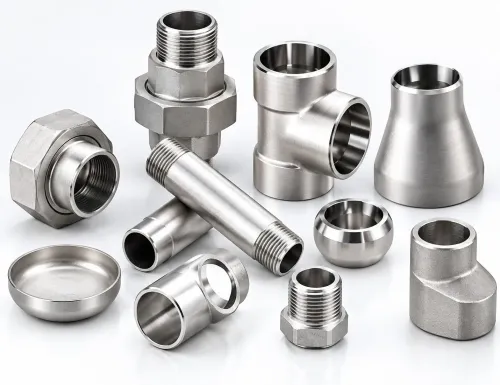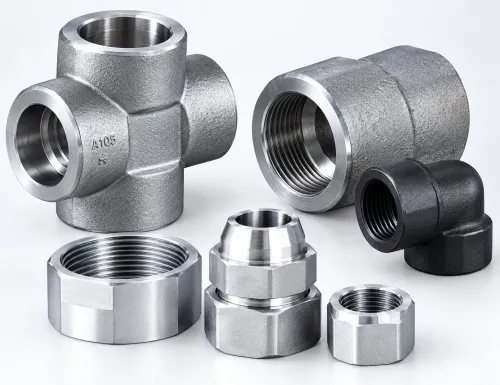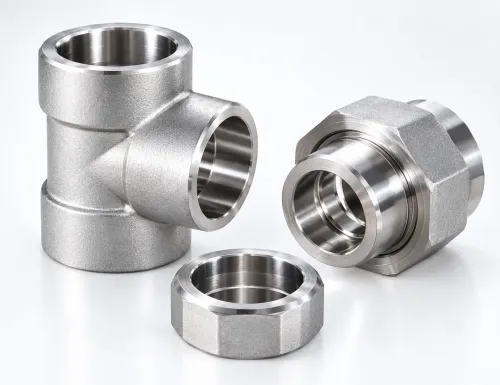
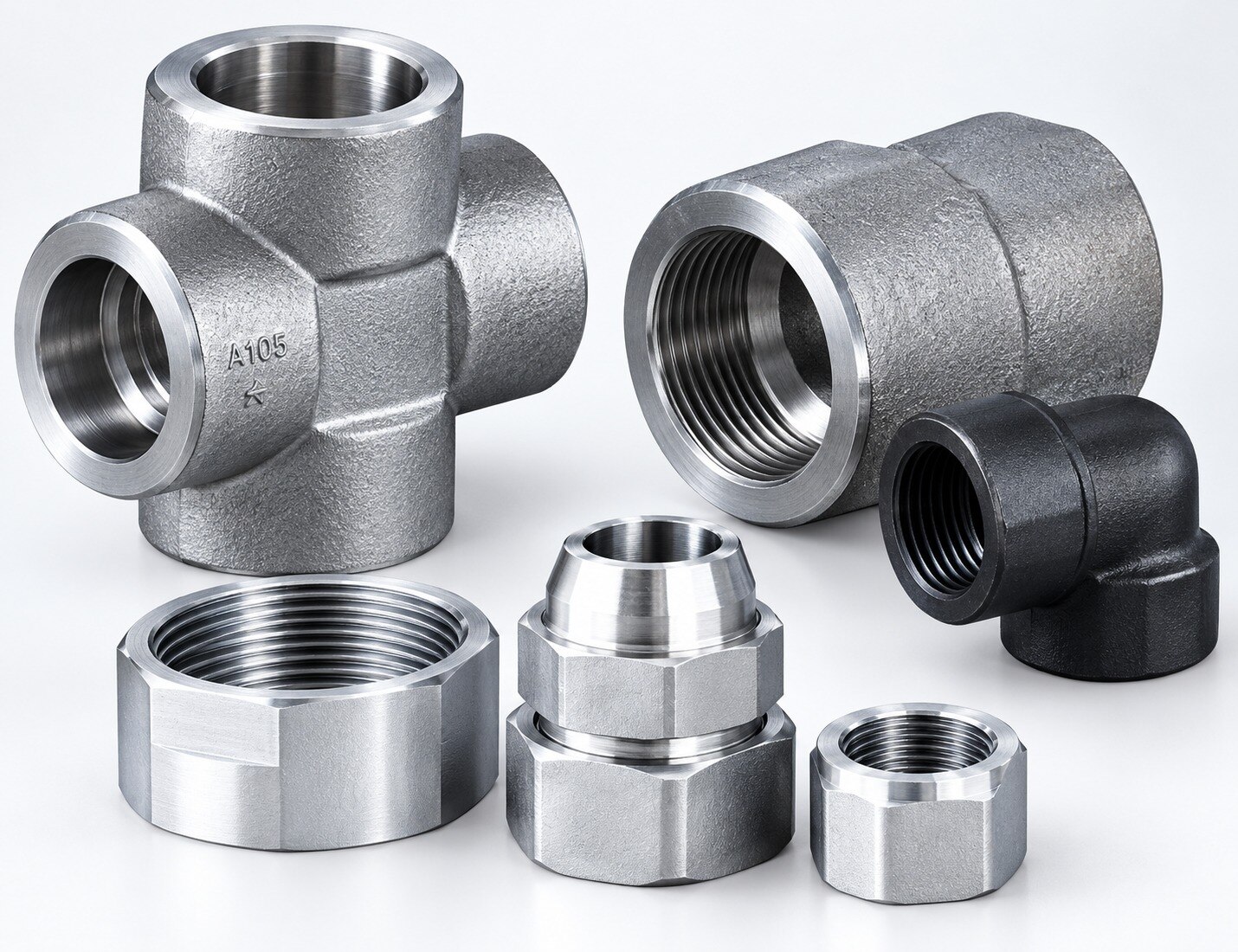
Mumbai buyers need to separate an ex-stock, heat-traceable flange from a made-to-order item described only as “super duplex.” By the end, you will know which grades and standards to specify, how to match the flange to your buttweld system, and which documents prove that the quoted material is genuine and available.
Key takeaways
- Specify UNS S32750 or S32760 before comparing quotations.
- Confirm NPS, pressure class, facing, bore, quantity, and stock status.
- Match flange dimensions and bore to the buttweld fitting system.
- Release orders only after MTCs, test reports, and welding controls are clear.
Start with the grade, size, class, and availability status
Ask for the exact grade, NPS, pressure class, facing, bore, quantity, and availability status before comparing any quotation. “Super duplex flange” is incomplete: the offer should identify UNS S32750, commonly ASTM A182 F53, or UNS S32760, commonly ASTM A182 F55. It should also state whether the flange is ex-stock or made to order.
- Is the material physically in stock, or will it come from a mill?
- What are the NPS size and pressure class: ASME B16.5 for common sizes through NPS 24, or ASME B16.47 for larger diameters?
- Is the facing raised face, flat face, or ring-type joint? For RTJ, which groove and ring designation apply?
- What bore, schedule or wall-thickness match, drilling, bolt-circle diameter, number of holes, outside diameter, and flange thickness will be supplied?
- How many pieces are available under one heat number, and what minimum order quantity applies?
- What is the manufacturing lead time, inspection hold point, third-party inspection arrangement, export packing, and document release date?
“Duplex alloy flange availability” means availability of this certified configuration, not merely a standard blank or a catalogue listing. Large sizes, uncommon F53 or F55 combinations, special bores, and RTJ execution often require mill production.
Treat “available” as unconfirmed until the supplier provides current stock evidence and a proposed material certificate; do not compare prices until every quotation describes the same configuration.
Compare UNS S32750 and UNS S32760 against the correct standards
A technically complete inquiry names the UNS grade and material standard; “super duplex” alone is not enough. For super duplex flanges for buttweld fittings in Mumbai, compare these grades before accepting an equivalent.
| Grade | Common forged-flange designation | Standards and approval checks |
|---|---|---|
| UNS S32750 | ASTM A182 F53 | Confirm the specified chemistry, mechanical properties, corrosion testing, heat treatment, and any project or client requirements. |
| UNS S32760 | ASTM A182 F55 | Confirm the specified chemistry, mechanical properties, corrosion testing, heat treatment, welding controls, and written project approval. |
UNS S32750 and UNS S32760 are not automatically interchangeable. If a quotation says “super duplex equivalent,” require the exact UNS grade, ASTM A182 class, test requirements, and written approval from the engineer or end client before ordering.
State the dimensional standard separately. Use ASME B16.5 for standard flange sizes and pressure classes within its scope; use ASME B16.47 for larger-diameter flanges, or provide the project drawing for a special design. ASME B16.9 governs wrought buttweld fittings, not flange dimensions.
Ask the supplier to confirm duplex alloy flange availability by grade, NPS, pressure class, facing, bore, drilling, and quantity. Common forged blanks can be in stock while F53 or F55 items with RTJ facing, special bores, large diameters, or nonstandard drilling require production.
Also request the welding procedure controls for heat input, interpass temperature, purge, shielding, filler metal, and phase balance.
Match the flange to the buttweld fitting as one dimensional system
Confirm fit by treating the flange, pipe, buttweld fitting, gasket, and bolt set as one dimensional system—not by matching nominal size alone. ASME B16.5 defines flange dimensions, while ASME B16.9 covers wrought buttweld fittings; neither standard makes every combination compatible.
Put these details on the same purchase inquiry for super duplex flanges for buttweld fittings in Mumbai:
- Nominal pipe size and pressure class, such as NPS 6, Class 300
- Pipe and fitting schedule or wall thickness, with the flange bore and its internal transition checked against the fitting
- Facing type—raised face, flat face, or ring-type joint—with the matching gasket; an RTJ flange also needs the correct groove and ring designation
- Outside diameter, flange thickness, bolt-circle diameter, number and diameter of bolt holes, plus bolt diameter, length, thread, and material
- Flange standard, grade, and material specification, such as ASME B16.5, UNS S32750 to ASTM A182 F53, or UNS S32760 to ASTM A182 F55
Ask for a dimensioned drawing before release, especially above NPS 24, where ASME B16.47 or a project-specific design may apply. Confirm the mating flange uses the same facing and bolt pattern; a Class 300 slip-on flange is not an automatic replacement for a weld-neck flange.
For cyclic or high-pressure service, select a weld-neck flange when smooth bore alignment and a full-penetration weld matter. Require the welding procedure to control heat input, interpass temperature, purge, shielding, filler metal, and phase balance.
Choose the flange type and screen Mumbai suppliers by evidence
A weld-neck flange is the usual choice for a direct buttweld connection because its tapered hub transfers stress gradually into the pipe and its bore can match the pipe wall. Do not substitute a slip-on flange for a high-pressure design without engineering approval; it changes the weld arrangement and stress behaviour.
| Flange type | Connection arrangement | When it applies |
|---|---|---|
| Weld-neck | Butt weld to the pipe or fitting | Direct buttweld systems, especially cyclic or high-pressure service |
| Slip-on | Pipe passes through the flange and is fillet-welded | Lower-severity service where the design permits it |
| Lap-joint | Used with a separate stub end | Systems requiring frequent dismantling or alignment adjustment |
| Socket-weld | Pipe enters a socket and receives a fillet weld | Socket-weld piping, not a buttweld fitting connection |
Screen a buttweld fittings supplier in Mumbai against documents, not a catalogue photograph. Request a quotation naming UNS S32750 or UNS S32760, ASTM A182 F53 or F55, ASME B16.5 or B16.47, NPS, class, facing, bore, drilling, quantity, and stock or made-to-order status.
Ask for a current inventory confirmation with heat numbers, not “available” without a date.
If you contact Nexus Forge Industries, ask whether its quotation covers the flange itself rather than only associated fittings, and request the proposed drawing before comparing prices.
A credible super duplex flange supplier in Mumbai will also explain lead time for large sizes, RTJ execution, special bores, and nonstandard drilling, then identify the welding procedure controls for heat input, interpass temperature, purge, shielding, and filler metal.
Related service
BUTTWELD FITTINGS BUTTWELD FITTINGS Nexus Forge Industries – Stainless Steel Buttweld Fittings Manufacturer & Supplier Nexus Forge Industries is a trusted manufacturer, supplier, and... |
Release the order only after certificates, testing, and welding controls are clear
Do not release payment or dispatch approval because a supplier says duplex alloy flange availability is “ex-stock.” Confirm that the exact UNS grade, NPS, Class, facing, bore, drilling, quantity, and heat numbers are physically identified and match your purchase order.
1. Obtain the material test certificate, preferably EN 10204 Type 3.1, or Type 3.2 when the contract requires independent inspection. Check the heat number, UNS S32750 or UNS S32760 grade, ASTM A182 F53 or F55 designation, chemical analysis, tensile results, yield strength, elongation, hardness, and heat-treatment condition.
2. Match the certificate’s heat number to the flange stamping, tag, packing list, and inspection release note. Reject an item with erased markings, mixed heats, or a certificate that describes only a generic “super duplex” material.
3. Review the dimensional report against ASME B16.5 or ASME B16.47, including flange thickness, outside diameter, bolt-circle diameter, hole count, bore, facing, and tolerances. Request PMI records for the finished flanges, not only the incoming bar or forging stock.
4. Check the specified corrosion and supplementary tests, such as ASTM G48 pitting-corrosion testing, ferrite measurement, ultrasonic examination, liquid penetrant examination, and hydrostatic testing where the order requires them.
5. Approve the welding procedure specification and supporting PQR before acceptance. It must control filler metal, heat input, interpass temperature, shielding gas, purge quality, and phase balance for welding super duplex flanges for buttweld fittings in Mumbai. Require the final dossier before dispatch.
Frequently asked questions
What information should you request before buying super duplex flanges in Mumbai?
Request the exact grade, NPS, pressure class, facing, bore, quantity, and availability status. The quotation should identify whether the flange is ex-stock or made to order.
How do UNS S32750 and UNS S32760 differ?
UNS S32750 is commonly supplied to ASTM A182 F53, while UNS S32760 is commonly supplied to ASTM A182 F55. Compare the material designation and applicable product standard on the quotation and certificates.
How do you match a flange to a buttweld fitting?
Treat the flange and fitting as one dimensional system. Check NPS, schedule or wall thickness, bore, outside diameter, facing, pressure class, and the applicable ASME B16 dimensions.
What evidence should you request from a Mumbai super duplex flange supplier?
Ask for material test certificates, heat and batch traceability, required inspection or test reports, dimensional records, and documented welding controls before releasing the order.