A forged flange and a buttweld fitting solve different layout problems: one creates a detachable bolted joint, while the other creates a permanent welded connection. By comparing access, installation, service conditions, inspection, and total installed cost, you can specify the right component for each line, nozzle, valve, and maintenance point.
Key takeaways
- Specify a flange when repeated access and bolted maintenance matter.
- Choose buttweld fittings for compact, permanent, low-leakage welded runs.
- Request wall thickness, material grade, dimensions, and inspection records.
- Compare delivered cost with welding, alignment, testing, and future maintenance.
What exactly are you comparing: a forged flange, forged fitting, or buttweld component?
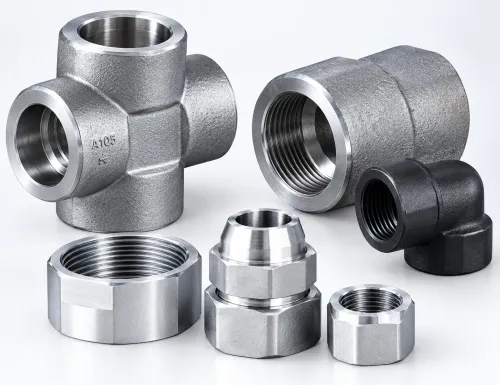
A forged flange is a flanged component, not a substitute for a forged socket-weld or threaded fitting under ASME B16.11. It needs a matching flange, gasket, bolts, alignment, and controlled tightening.
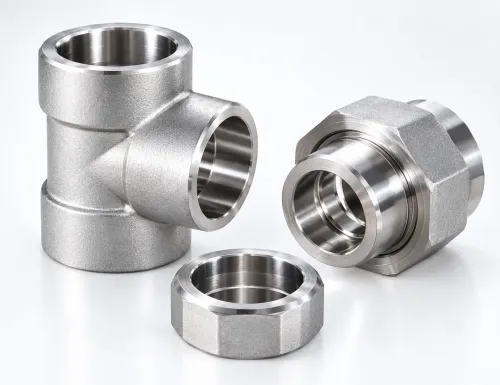
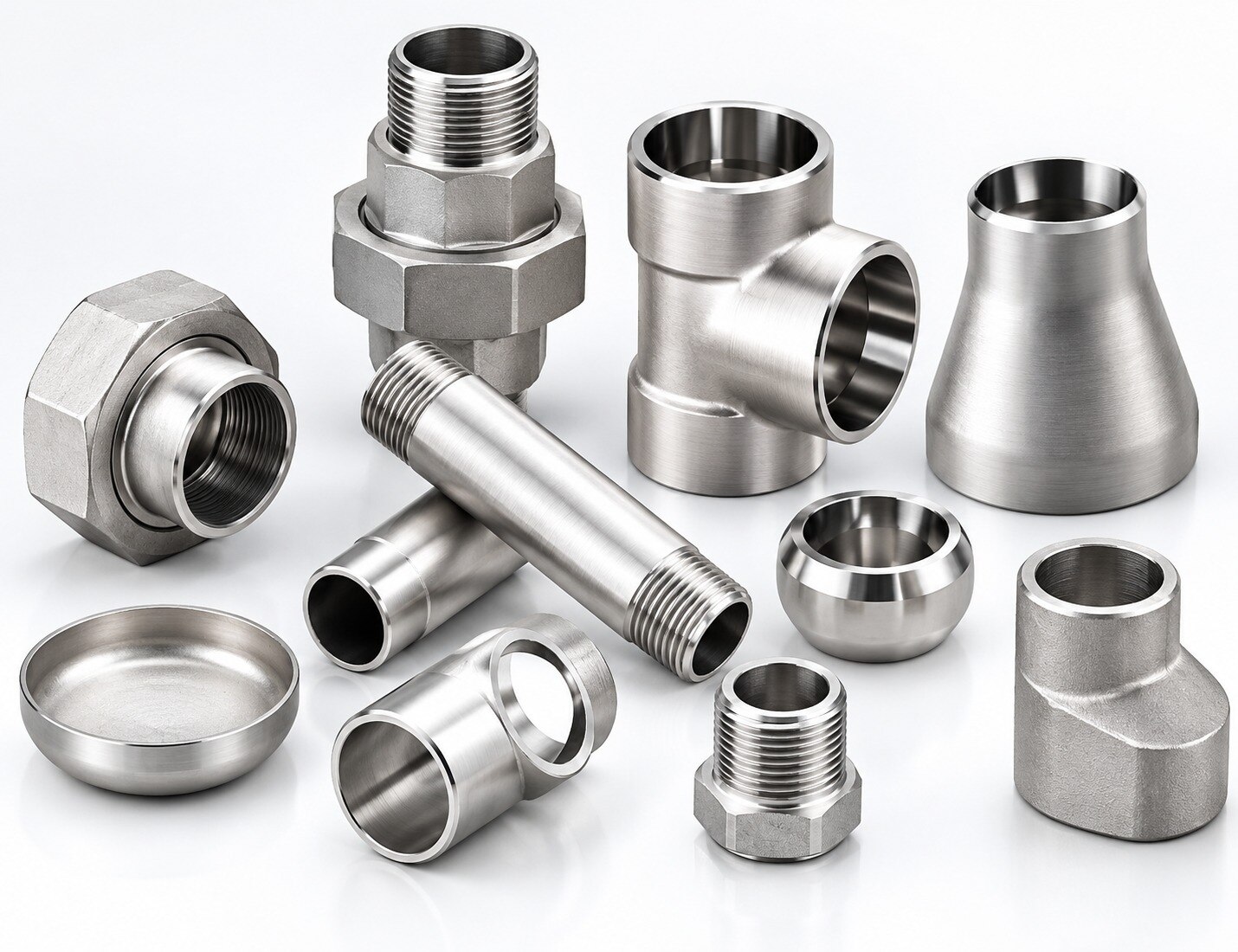
A buttweld elbow, tee, reducer, cap, or return bend is a factory-made wrought fitting covered by ASME B16.9 and joins directly to pipe through a prepared butt weld.
- Identify the component before requesting a forge flange comparison: flange, socket-weld fitting, threaded fitting, or buttweld fitting. “Carbon-steel forged flange” and “stainless BW elbow” are incomplete descriptions.
- State NPS, pipe outside diameter, wall thickness or schedule, material grade and group, design temperature, pressure class, flange facing, bore, end preparation, and project piping class.
- Use ASME B16.5 for NPS 1/2 through NPS 24 flanges and ASME B16.47 for NPS 26 through NPS 60. Use ASME B16.9 for wrought buttweld fittings and ASME B16.11 for forged socket-weld or threaded fittings.
- Match the material group and design temperature to the pressure-temperature table. Class 300 does not provide one pressure rating for every alloy or temperature.
- Check a weld-neck flange bore against the pipe outside diameter and wall thickness. A nominal-size match can still create an abrupt internal step unless the bore and internal machining requirement are specified.
For buyers comparing forge flange versus buttweld fittings in Mumbai, the connection type determines the scope: a flange creates a detachable bolted joint, while a buttweld fitting creates a permanent welded joint. The price inquiry must separate dimensional standard, material, facing, schedule, bore, inspection, and documentation.
How do connection method, access, and service performance change the choice?
Use a flanged joint where crews must disconnect equipment; use a buttweld joint where a compact, permanent connection improves line performance. A useful forge flange comparison must include installation and maintenance, not only component price.
| Option | Installation and access | Operating trade-off |
|---|---|---|
| Forged flange assembly | Match two flange faces, fit a gasket, align the bolt holes, and tighten bolts in a controlled sequence. | Detachable for valves, strainers, equipment nozzles, removable spools, and inspection points, but adds a gasketed leak path. |
| Buttweld fitting | Prepare the bevel, fit the joint, weld it under a qualified procedure, inspect it, and apply heat treatment when required. | Permanent, compact, and lighter because it removes flange pairs, gaskets, and bolting. |
Flanges also add attachment welds between the flange and pipe, plus the detachable joint itself. A buttweld assembly usually reduces the external envelope and weight, which helps in congested Mumbai pipe racks and skids.
Its smooth internal transition suits corrosive, erosive, sanitary, or high-cycle service only when the weld root is sound; poor root profile, excess penetration, misalignment, or lack of fusion can destroy that advantage.
Compare gasket replacement, bolt retightening, joint corrosion, welding access, NDE access, thermal cycling, field repair, insulation removal, and future equipment removal. A flange may simplify maintenance but increase leak and corrosion points; a buttweld may improve containment while making equipment removal and field repair slower.
Choose on total installed and lifecycle effort, not the fitting price alone.
When should you specify a flange, elbow, tee, reducer, or another fitting alternative?
1. At an equipment nozzle, valve, strainer, pump connection, removable spool, or planned maintenance break, specify a forged flange assembly when access is worth the extra gasket, bolts, alignment, and controlled tightening. A permanent welded joint can reduce leaks but make removal impractical.
2. On a continuous process line, specify an ASME B16.9 buttweld elbow, tee, reducer, or cap when compact routing, fewer leak paths, smooth flow, and resistance to repeated temperature changes matter more than rapid disconnection. This is usually the stronger forge flange versus buttweld fittings in Mumbai choice for congested racks and skids.
3. For small-bore piping, treat socket-weld fittings as buttweld fitting alternatives only after checking the insertion gap, fillet-weld size, inspection access, and dead-leg risk. Rule them out when the socket creates a crevice, local stress concentration, or unsuitable restraint during thermal expansion and severe cycling.
4. Use threaded fittings only on compatible small-bore, lower-severity services where leakage and loosening risks are controlled. Do not select them for high-temperature or severely cyclic lines.
5. Use flanged joints where maintenance access governs the layout; use fabricated fittings for unusual geometry or large sizes only when the project accepts added fabrication, weld qualification, dimensional control, and NDE.
6. Before approval, mark each break point on the piping layout and record whether disconnection, flow continuity, thermal movement, or fabrication effort controls the choice.
What fit-up, welding, and inspection requirements belong in the purchase inquiry?
Start with a dimensional and material hold point; do not approve a quote described only as “forged flange” or “stainless BW elbow.” For epc piping supply in mumbai, require the inquiry to state NPS, outside diameter, schedule or actual wall thickness, material grade, pressure-temperature rating, flange facing, bore, end preparation, and governing standard.
1. Check the component against ASME B16.5 or B16.47 for flanges, ASME B16.9 for buttweld fittings, and ASME B16.11 for socket-weld fittings. Apply ASME B16.25 to butt-welding-end preparation, then identify additions from the project piping class or ASME B31.3.
2. Define butt-weld fit-up: bevel angle, root face, root gap, alignment tolerance, approved WPS and PQR, welder qualification, PWHT triggers, and NDE extent by radiography or ultrasonics. For socket welds, state the insertion gap and required fillet-weld dimensions.
3. For flange attachment welds, specify weld configuration, access for welding and examination, welding sequence, acceptance criteria, and examination method. State whether internal machining or bore blending is required.
4. Request the material test certificate, heat or batch traceability, chemical and mechanical results, heat-treatment record, dimensional report, marking record, PMI when specified, and hydrostatic or pressure-test records.
Make the purchase order name acceptance criteria, NDE extent, packing method, and certificates required by the piping class. ASME B16.9 or B16.5 dimensional compliance alone does not prove service suitability. A weld-neck flange still needs a compatible bore and pipe wall transition.
How should Mumbai EPC buyers compare supplier offers and lifecycle cost?
Compare total installed lifecycle cost by line class, not the quoted piece price. A flange scope includes matching components, gaskets, studs or bolts, washers, alignment, torque control, and future gasket replacement; a buttweld scope includes bevel preparation, welding consumables, qualified welders, NDE, triggered PWHT, reinstatement, and possible field repair.
| Option | Cost and effort added after purchase | Lifecycle implication |
|---|---|---|
| Flange assembly | Matching flange, gasket, bolting, alignment, controlled torque | Faster disconnection, but gasket replacement and joint maintenance remain |
| Buttweld fitting | Beveling, fit-up, welding, NDE, PWHT, reinstatement | Compact permanent joint, but inspection and repair require welding access |
For epc piping supply in mumbai, require each offer to state the complete technical and documentation basis:
- Quote by line class: standard, size, schedule, grade, facing, bore, pressure-temperature basis, end preparation, testing, marking, traceability, and document index.
- Separate the flange bill of materials from the buttweld fitting bill, including installation and inspection activities.
- Compare buttweld fitting alternatives against access, outage duration, coating or insulation removal, and future equipment replacement.
Evaluate Nexus Forge Industries by whether its forged, socket-weld, and buttweld offer includes project-specific material certificates, heat traceability, inspection records, and NDE results—not by the word “forged” alone. Select detachable joints where maintenance requires access; use welded fittings where a compact permanent connection benefits the line.
Related services
BUTTWELD FITTINGS BUTTWELD FITTINGS Nexus Forge Industries – Stainless Steel Buttweld Fittings Manufacturer & Supplier Nexus Forge Industries is a trusted manufacturer, supplier, and... |
FORGED FITTINGS Manufacturer & Supplier – Nexus Forge Industries Nexus Forge Industries is a trusted manufacturer and supplier of high-quality forged fittings... View service → |
Frequently asked questions
What is the difference between a forged flange and a buttweld fitting?
A forged flange creates a bolted, gasketed joint with a matching flange, bolts, and controlled tightening. A buttweld fitting joins directly to pipe through a circumferential weld.
When should an EPC buyer specify a flange instead of an elbow, tee, or reducer?
Specify a flange where equipment removal, inspection access, valves, or repeated maintenance justify a bolted joint. Use an elbow, tee, or reducer when you need to change direction, branch a line, or transition between pipe sizes.
What should a Mumbai EPC purchase inquiry include?
State the connection type, ASME class or dimensions, material grade, schedule or wall thickness, size, end preparation, applicable standards, heat treatment, testing, inspection, marking, and documentation requirements.
How should buyers compare flange and buttweld fitting supplier offers?
Compare the complete installed cost, including gaskets, bolts, welding, fit-up, inspection, testing, alignment, delivery, certificates, and future maintenance—not only the quoted piece price.
Related service
SOCKETWELD FITTINGS Socket Weld Fittings Manufacturer & Supplier – Nexus Forge Industries Nexus Forge Industries is a trusted manufacturer and supplier of high-quality... View service → |