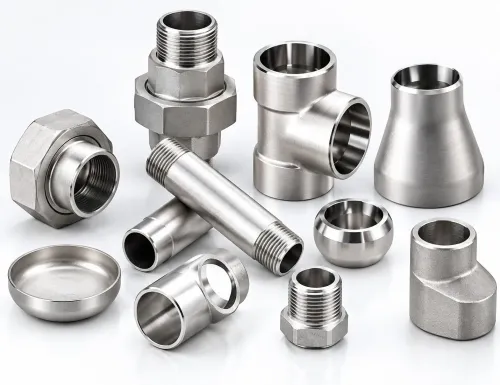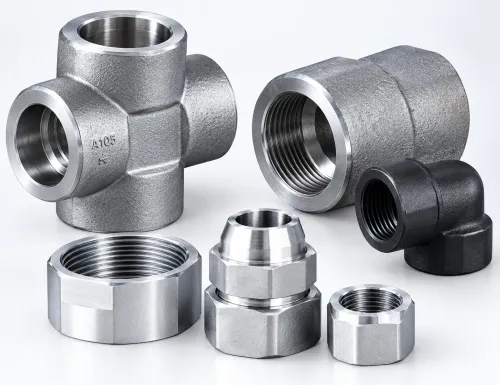
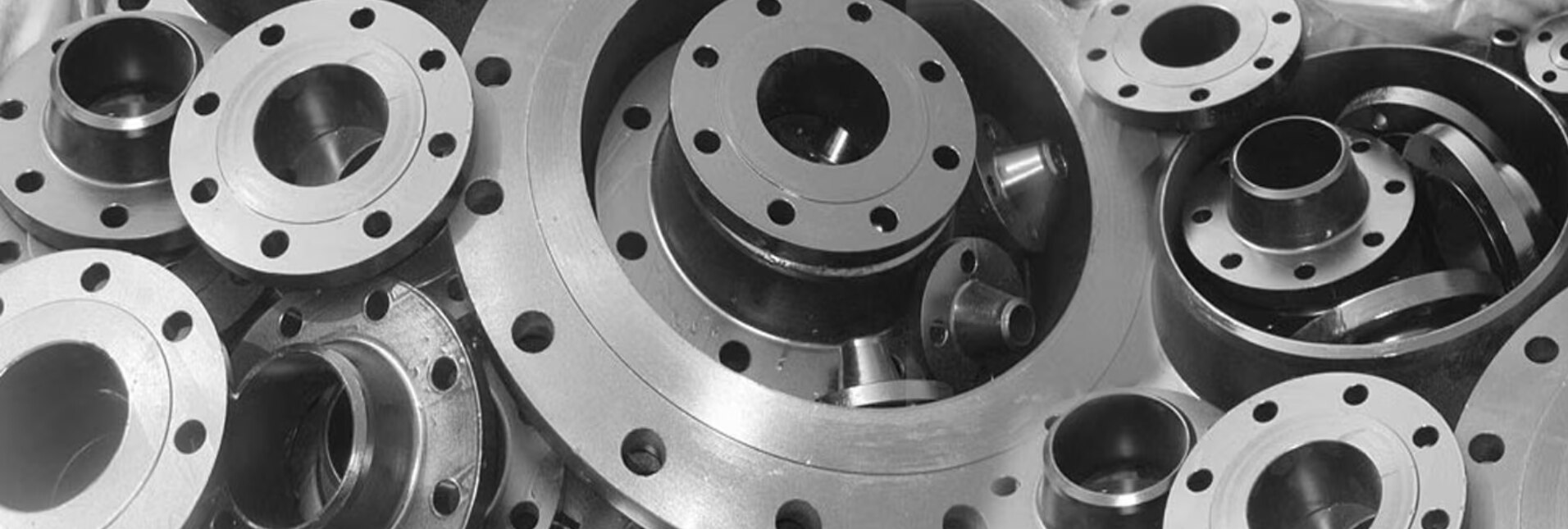
“Monal” is usually a spelling variant or purchasing error for Monel, so a Mumbai quotation must identify the exact nickel-copper alloy, product type, dimensions, and governing standard. By separating flanges from butt-welding fittings and checking documents, mating details, and service conditions, you can compare suppliers without accepting an incomplete Class 150 or Class 300 description.
Key takeaways
- Treat “monal” as an error until the supplier confirms the exact Monel alloy.
- Name the flange type, fitting size, pressure class, material grade, and governing standard.
- Compare flange and fitting dimensions, bore, schedule, and weld-end details before approval.
- Request heat numbers, mill test certificates, and traceability records from the supplier.
Start by Defining What “Monal” Means on the Purchase Request
“Monal” is not a flange type or a buttweld fitting. It is usually a spelling variant or purchasing error for Monel, the Special Metals trademark covering nickel-copper alloys such as MONEL alloy 400 and MONEL alloy K-500. Treat “monal” as an incomplete material description until the supplier identifies the exact alloy.
| Term | What it means | How to write it on the request |
|---|---|---|
| Flange | A component that bolts to a pipe, valve, vessel, or equipment nozzle | Welding-neck flange, slip-on flange, blind flange, or another named type |
| Butt-welding fitting | A component welded directly into the pipe run | Butt-weld elbow, tee, reducer, or cap |
| Material designation | The alloy used to manufacture the component | MONEL alloy 400, UNS N04400, or MONEL alloy K-500, UNS N05500 |
A welding-neck flange is sometimes called a “buttweld flange” because it attaches to the pipe by a butt weld, but it is not classified as a butt-welding fitting. Separate those terms in every inquiry, including a search for “monal flanges buttweld fittings in mumbai.”
Require the quotation, drawing, marking, and material certificate to state the actual designation, such as UNS N04400. Do not accept “Monal” alone; it cannot confirm whether you are buying alloy 400, alloy K-500, or the wrong material entirely.
Specify the Fitting, Flange Type, Size, and Governing Standard
Put four identifiers on the inquiry: the product, alloy grade, dimensions, and governing standard. Write “Monel 400, UNS N04400” or “Monel K-500, UNS N05500” only when that is the required material; “Monel” alone leaves the grade and properties unresolved.
If your search wording is “monal buttweld fittings,” convert it into a precise request for elbows, tees, reducers, or caps.
| Product | Specify | Governing standard |
|---|---|---|
| Welding-neck flange | NPS, pressure class, raised face, flat face, or ring-type joint; bore and pipe schedule | ASME B16.5 for NPS 1/2–24; ASME B16.47 above NPS 24 |
| Butt-welding elbow, tee, reducer, or cap | NPS, wall thickness or schedule, end bevel, alloy grade, and dimensions | ASME B16.9 for the fitting; ASME B16.25 for butt-welding ends |
| Slip-on, blind, or lap-joint flange | NPS, class, facing, bore, thickness, and assembly details where applicable | ASME B16.5; use ASME B16.47 for larger diameters |
Request the quotation in separate flange and fitting lines. A class such as 300 does not define the weld-end geometry, bore, or pipe fit. State the facing because gasket choice and bolt-up depend on it.
Add heat number, product specification, heat-treatment condition, marking, and mill test certificate requirements. Ask for dimensional inspection records and plan PMI at receipt; PMI confirms the alloy family but does not replace material certification. For sour service, require project-specific NACE MR0175/ISO 15156 compliance, including condition and hardness limits.
Use a Joint-Matching Checklist Before You Approve the Quote
Confirm the joint on paper before you compare prices. A welding-neck flange connects to the pipe through a butt weld; an elbow, tee, reducer, or cap is the butt-welding fitting. Do not let a quotation treat those as interchangeable items.
1. Match the nominal size and weld-end geometry. Record NPS, pipe schedule or wall thickness, outside diameter, bore, bevel, and tolerances for both parts. ASME B16.25 governs butt-welding-end preparation; ASME B16.9 covers wrought fittings from NPS 1/2 through NPS 48.
2. Match the flange details separately. Require flange type, NPS, pressure class, facing, bore, and governing standard. ASME B16.5 applies through NPS 24, while ASME B16.47 covers larger flanges. Raised-face, flat-face, and ring-type-joint designs need different gasket and bolt-up arrangements.
3. Match the material specification and grade. For forged Monel flanges, check ASTM B564; for nickel-alloy butt-welding fittings, check ASTM B366. Do not accept ASTM A182 as a substitute without confirmation that the specified grade and purchase specification apply.
4. Check the documents against the parts. Require the heat number stamped or marked on each flange or fitting, the same number on the mill test certificate, the grade, dimensions, pressure class, and heat-treatment condition.
5. Inspect on receipt. PMI can confirm the broad alloy family, but it cannot replace the certificate or dimensional inspection. Give this checklist to a buttweld fitting supplier in mumbai before approving the quote.
Qualify a Monel Flanges Supplier in Mumbai Through Traceability
Reject any quote that cannot tie each physical part to a material record. A dependable monal flanges supplier in mumbai will show an uninterrupted chain from the flange or fitting’s marking to its mill test certificate, purchase specification, and inspection records.
Ask for:
- The heat number stamped or securely marked on every flange, elbow, tee, reducer, or cap.
- A mill test certificate carrying the same heat number, actual alloy designation, chemical analysis, mechanical results, and heat-treatment condition.
- The product specification: ASTM B564 for forged nickel-alloy flanges or ASTM B366 for wrought nickel-alloy butt-welding fittings.
- The drawing or inspection report confirming NPS, facing, bore, dimensions, tolerances, and pressure class under ASME B16.5, or ASME B16.47 for larger flanges.
- PMI results at receipt, alongside dimensional inspection rather than as a substitute for either document.
| Evidence | What it proves | Reject when |
|---|---|---|
| Heat number on part and certificate | The supplied item is linked to a specific melt | Numbers differ, are missing, or look altered |
| UNS N04400 or UNS N05500 | The alloy is identified beyond a trade-name spelling | Documents say only “Monel” or “monal” |
| Heat-treatment condition | The material matches the ordered condition | The certificate leaves condition blank |
| ASME marking and inspection report | The flange matches size, facing, rating, and standard | The quote says only Class 150, 300, or 600 |
Ask Nexus Forge Industries for this evidence before comparing price; traceability protects you from an inexpensive part that cannot pass receiving inspection. PMI confirms the broad alloy family, not the complete specification or dimensions.
Related service
BUTTWELD FITTINGS BUTTWELD FITTINGS Nexus Forge Industries – Stainless Steel Buttweld Fittings Manufacturer & Supplier Nexus Forge Industries is a trusted manufacturer, supplier, and... |
Match Alloy, Welding Controls, and Service Conditions to the Project
Treat “monal buttweld fittings” as a search term, not a material identity. Confirm the grade, UNS number, product specification, and heat-treatment condition. For Monel alloy 400, look for UNS N04400 and chemistry near 63% nickel and 28–34% copper; “nickel alloy” alone is not sufficient.
A forged flange should be ordered to ASTM B564, while wrought nickel-alloy butt-welding fittings fall under ASTM B366. Do not accept ASTM A182 as the default for a nickel-copper product until the purchase specification confirms the grade.
Ask a buttweld fitting supplier in Mumbai for heat numbers marked on each part, matching mill certificates, dimensional inspection, and PMI at receipt. PMI confirms alloy family; it does not replace certification.
| Check | Evidence to request | Reject or recheck when |
|---|---|---|
| Welding | Qualified WPS/PQR, filler-metal designation, cleaning method, and required radiography or other examination | The weld is assumed routine, especially for Monel-to-carbon-steel joints |
| Corrosion | Concentration, temperature, velocity, aeration, and contaminants reviewed against alloy selection | The justification is only “marine grade”; Alloy 400 performs poorly in strongly oxidizing acids |
| Sour service | Project-specific NACE MR0175/ISO 15156 compliance, including material condition, hardness, and metallurgical limits | The certificate gives corrosion resistance but no sour-service qualification |
For sour service, request the actual NACE/ISO 15156 basis rather than a generic claim. That distinction can prevent a certified-looking part from failing the project specification.
Frequently asked questions
What does “monal” mean on a flange or buttweld fitting purchase request?
“Monal” is usually a spelling variant or purchasing error for Monel. Ask the supplier to identify the exact alloy, such as MONEL alloy 400 or MONEL alloy K-500, before quoting.
What information must you specify when sourcing Monel flanges and buttweld fittings?
State the exact alloy, fitting and flange type, nominal pipe size, wall thickness or schedule, pressure class, facing, dimensions, and governing standards such as ASME B16.5 or ASME B16.9.
How do you check that a Monel flange matches a buttweld fitting?
Compare the nominal size, flange rating, bore, outside diameter, facing, pipe schedule, fitting wall thickness, bevel dimensions, and weld-end geometry. Confirm the complete joint against the piping drawing.
Which traceability documents should a Monel flanges supplier in Mumbai provide?
Request the heat number, material test certificate, chemical and mechanical test results, product dimensions, inspection records, and any required PMI, hydrostatic, or nondestructive examination reports.
Why do alloy selection and welding controls matter for Monel buttweld fittings?
Monel 400 and K-500 have different properties and service limits. Match the alloy to temperature, pressure, corrosion exposure, and welding procedure, then verify filler metal, preheating, cleaning, and post-weld inspection requirements.