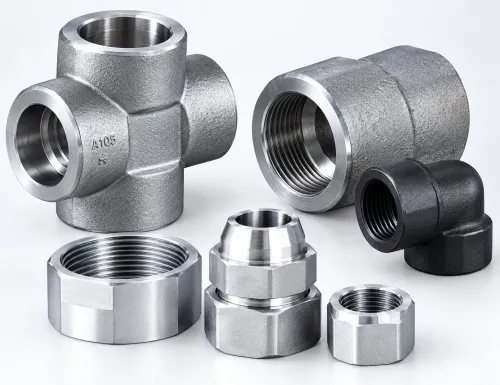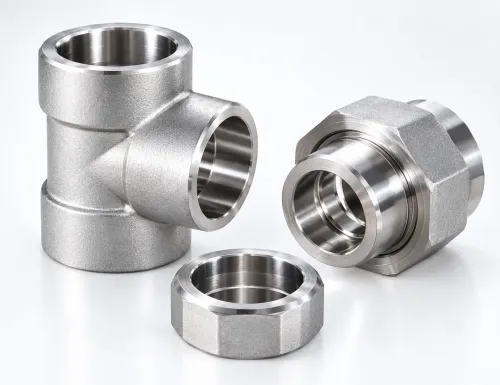
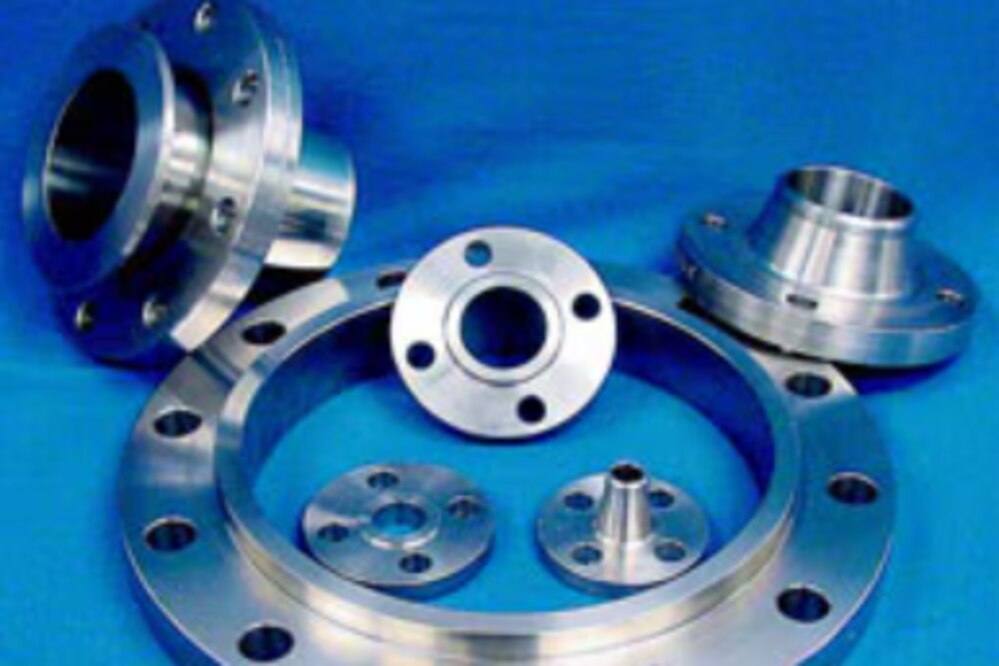
A carbon steel flange does not usually attach directly to an existing elbow, tee, or reducer; the reliable retrofit uses a correctly selected flange, pipe spool, and qualified butt weld. By the end, you will know how to assess the existing fitting, select compatible dimensions and materials, plan the installation, and maintain the completed joint in Mumbai’s humid coastal conditions.
Key takeaways
- Use a weld-neck flange and short spool for most buttweld retrofits.
- Match pipe schedule, flange rating, bore, face, material grade, and gasket.
- Control alignment, welding, bolt tightening, and pressure testing in sequence.
- Request mill certificates, dimensional reports, weld procedures, and traceability records.
Can a CS flange connect to an existing buttweld fitting?
A CS flange does not normally connect directly to an existing buttweld elbow, tee, or reducer. The usual retrofit uses a weld-neck flange butt-welded to a short pipe spool, with the existing fitting welded to the spool’s opposite end. A direct connection requires an integral flanged fitting or a purpose-designed flange adapter.
For carbon steel flange piping use, choose the flange type against service conditions, not the label “Class 300” alone. NPS, design pressure, temperature, piping code, fatigue, vibration, and the existing line’s material all govern the selection.
| Flange type | What it means | When it applies |
|---|---|---|
| Weld-neck | Butt-welded hub with a tapered transition | High-pressure, cyclic, vibrating, or fatigue-sensitive service when the governing code permits it |
| Slip-on | Pipe passes through the flange and uses two fillet welds | Lower-severity service where the code and design accept reduced wall continuity |
| Blind | Solid flange that closes a line | Terminating a nozzle or line, not joining two components |
| Socket-weld | Pipe seats in an internal socket | Small-bore systems designed for socket joints |
| Threaded | Internal thread receives threaded pipe | Threaded piping, not a butt-welded spool |
A weld-neck flange provides better wall continuity than the two fillet welds of a slip-on flange, making it the stronger starting point for using cs flanges with buttweld fittings in mumbai. The correct cs flange use with buttweld fittings still depends on the governing code and inspection requirements.
How do you match the flange, fitting, and existing pipe?
For CS flange use with buttweld fittings, verify the joint before cutting, not after the spool is removed. In carbon steel flange piping use, collect these records from the drawing, component markings, and field measurements:
- Record NPS, pipe outside diameter, wall thickness or schedule, flange bore, fitting center-to-end dimensions, bevel angle, and pipe and fitting out-of-roundness.
- Match flange dimensions to ASME B16.5 for NPS 1/2 through NPS 24, or ASME B16.47 for NPS 26 through NPS 60. Check the buttweld fitting against ASME B16.9 and its butt-welding-end preparation against ASME B16.25.
- Compare the flange bore with the pipe and fitting inside diameters. A nominally matching Class 300 flange can still create an internal step, increasing turbulence and stress concentration in erosion-sensitive, slurry, pigged, and process-clean lines.
- Check the pressure class and the material-group pressure-temperature rating at the design temperature. “Class 300” alone does not establish an allowable pressure.
- Request the specified grade, such as ASTM A105/A105M for a forged carbon-steel flange or ASTM A350/A350M LF2 for low-temperature service. Verify the fitting separately, such as ASTM A234/A234M WPB when specified.
- Inspect the existing component for markings, heat number, wall loss, cracks, deformation, repairs, and remaining service life before approving reuse.
Reject the match if dimensions, bore, rating, material, or condition cannot be documented.
What installation sequence prevents a leaking or stressed retrofit?
A retrofit using CS flanges with buttweld fittings in Mumbai starts with a safe, documented shutdown, not with loosening bolts. Allow time for permits, access, scaffolding, purging, welding, inspection, pressure testing, drying, and startup.
1. Isolate the line, drain it, depressurize it, purge it, and gas-test it before cutting. Confirm zero pressure and an acceptable atmosphere at the work point; trapped fluid or vapour can turn hot work into a fire, toxic-exposure, or pressure event.
2. Mark the cut, remove the defective section, and cut the pipe squarely. Preserve the approved straight length, then verify the spool, fitting, wall thickness, bevel, and internal bore before fit-up.
3. Fit the spool and buttweld fitting without forcing gaps, bolt holes, or alignment. Set the flange face and bolt holes to the approved orientation, then check root gap, flange squareness, alignment, and bore before placing tack welds.
4. Complete the full-penetration butt weld using a qualified welding procedure and qualified welders. Follow that procedure for preheat, interpass temperature, consumable storage, hydrogen control, and post-weld heat treatment; material, thickness, restraint, service, and construction code set those controls.
5. Install the specified matching gasket system. Do not pair a ring-type-joint flange with a spiral-wound gasket or pull a raised face onto a flat face without the specified transition arrangement.
6. Fit the specified bolt grade and length, then tighten under ASME PCC-1 using controlled, documented sequencing.
7. Finish visual and dimensional checks, required NDE, pressure testing, drying, records, and controlled startup before recommissioning.
When is a CS flange the wrong choice, and how do you maintain it in Mumbai?
Reject a carbon-steel flange when its material-group pressure-temperature rating is below the design condition, or when corrosive, high-temperature, low-temperature, or cyclic service calls for another alloy or a qualified transition procedure. Do not insert it into a stainless-steel or alloy-steel process line until you review corrosion, temperature, code, and galvanic-contact risks.
1. For an approved joint, use an isolation kit, coating, or special gasket only if it preserves flange alignment, gasket seating, electrical-bonding requirements, fire safety, and process safety. Record the selected protection in the installation file.
2. Schedule buttweld fitting maintenance in Mumbai after each monsoon. Inspect flange gaps, bolt heads, nuts, weld toes, supports, low points, insulation terminations, clamps, dead legs, damaged paint, and water traps for corrosion or trapped moisture.
3. Mark repeatable ultrasonic thickness locations and record readings against dates. Calculate wall-loss rates over time instead of waiting for a flange leak. Check flange rotation, bolt loosening, gasket extrusion, corrosion under insulation, and coating failure; use a documented bolt-retightening policy, never tightening by feel.
4. Replace the gasket after disassembly. Do not reuse one that has been compressed or damaged. After hydrotesting or flushing, drain and dry low points, dead legs, and horizontal runs promptly, especially before closing valves or returning the line to service.
5. Make flange guards removable or inspectable. A guard that conceals corrosion or retains rainwater defeats carbon steel flange piping use protection.
What should you request from a Mumbai supplier before approving the retrofit?
Approve the retrofit only after deciding whether you need a flange manufacturer, a buttweld-fittings supplier, or both. Ask every supplier to identify each supplied component: flange, pipe spool, fitting, gasket, bolts, or complete fabricated assembly.
| Supplier route | What it covers | Evidence to request |
|---|---|---|
| Flange manufacturer | CS flange and forging records | Maker, ASTM A105/A105M or specified grade, facing, bore, pressure class, dimensions, heat traceability |
| Buttweld-fittings supplier | Elbow, tee, reducer, or spool | ASTM A234/A234M WPB or specified grade, ASME B16.9 dimensions, ASME B16.25 bevel details |
| Fabricator or package supplier | Welded assembly and inspection | Drawing, weld map, qualified WPS and welders, NDE, pressure test, PWHT records |
A supplier known for buttweld fittings may not make CS flanges. Confirm both sources rather than assuming one company covers the joint. Nexus Forge Industries can be assessed for the fitting scope, while the flange maker remains separately accountable for flange evidence.
- Heat-number markings and mill test certificates showing chemical composition and mechanical properties
- Dimensional inspection, material-grade confirmation, and impact-test results when service requires them
- Hydrostatic or pressure-test documents when specified
- Drawing comparison against the existing spool, including bolt-hole orientation, bore, and face-to-face dimensions
For using CS flanges with buttweld fittings in Mumbai, coordinate fabrication, inspection, testing, spares, and post-monsoon follow-up. Keep certificates, gasket details, bolt-tightening records, leak results, repairs, and repeat thickness readings in the asset file supporting future buttweld fitting maintenance in Mumbai.
Related service
BUTTWELD FITTINGS BUTTWELD FITTINGS Nexus Forge Industries – Stainless Steel Buttweld Fittings Manufacturer & Supplier Nexus Forge Industries is a trusted manufacturer, supplier, and... |
Frequently asked questions
Can a CS flange connect directly to an existing buttweld fitting?
Not normally. Use a weld-neck flange butt-welded to a short pipe spool, then weld the existing elbow, tee, or reducer to the spool. Use a direct connection only with an integral flanged fitting or purpose-designed flange adapter.
How do you match the flange, fitting, and existing pipe?
Match the pipe outside diameter, wall thickness or schedule, flange pressure class, nominal size, bore, facing, material grade, gasket, and bolt dimensions. Check ASME B16.5 for standard flanges and ASME B16.9 for buttweld fittings where those standards apply.
What installation sequence prevents a leaking or stressed retrofit?
Confirm dimensions, isolate and inspect the line, fit the spool without forcing alignment, complete the qualified welds, inspect them, install the gasket, tighten bolts in a cross-pattern, and pressure-test the completed joint.
When is a CS flange the wrong choice, and how do you maintain it in Mumbai?
Choose another material when the fluid, temperature, corrosion allowance, or galvanic pairing exceeds carbon steel's suitability. In Mumbai, inspect for coating breakdown, rust, flange-face pitting, gasket seepage, and bolt corrosion, especially in humid or coastal exposure.
What should you request from a Mumbai supplier before approving the retrofit?
Request the flange and fitting material grades, heat numbers, mill test certificates, dimensional inspection report, pressure rating, facing details, applicable standard, welding procedure qualification, welder qualifications, inspection plan, and traceability records.