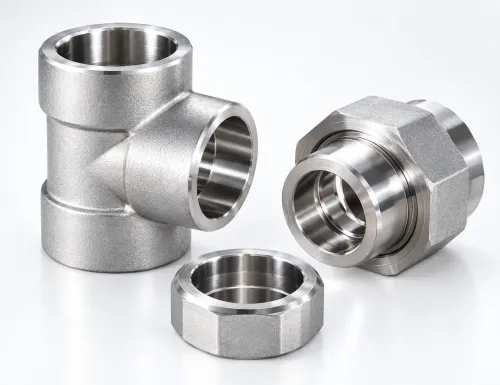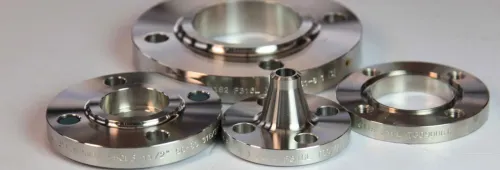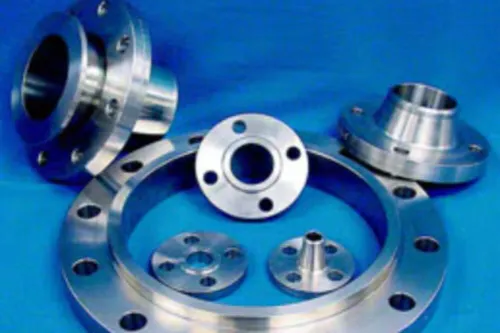
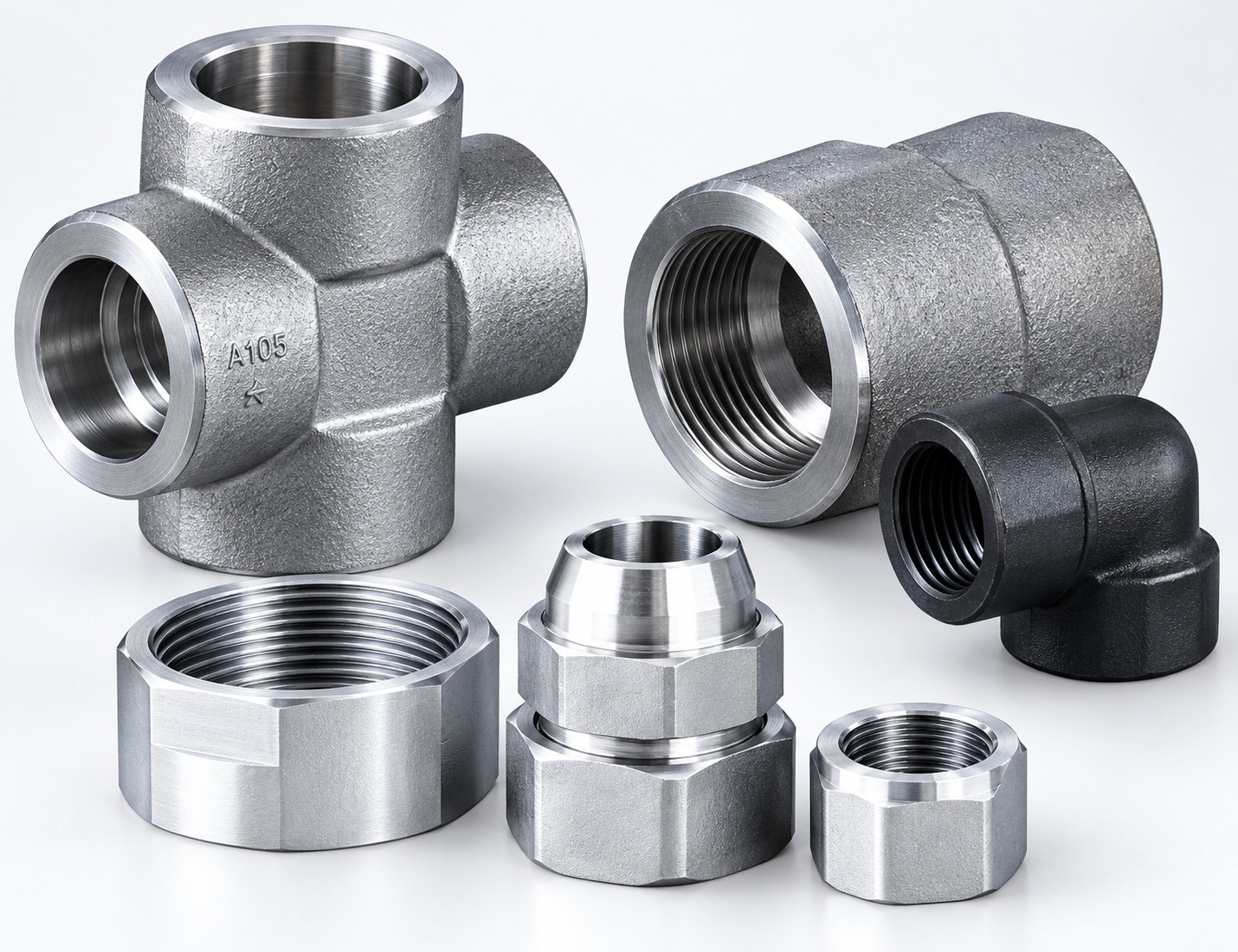
A super duplex flange is justified by the complete piping environment, not by the word “duplex” on a quotation. By the end, you will be able to screen chloride and temperature exposure, match the flange to a forged fitting, challenge material records, and identify when a lower-cost or higher-alloy option deserves approval.
Key takeaways
- Specify super duplex for chloride, seawater, crevice-corrosion, or high-load service.
- Match flange and forged fitting grades, pressure classes, dimensions, and weld procedures.
- Request heat numbers, EN 10204 3.1 certificates, and ferrite-test results.
- Keep super duplex components sealed, separated from carbon steel, and fully traceable.
When does super duplex make sense in a Mumbai piping system?
Super duplex makes sense when chloride pitting, crevice corrosion, seawater, or high mechanical loading threatens the complete pressure boundary. Mumbai’s coastal humidity and salt deposits increase exposure, but location alone does not justify the alloy.
Confirm chloride concentration, oxygenation, temperature, cleaning chemicals, flow velocity, and crevice geometry before choosing super duplex flanges for forged fittings in Mumbai.
| Option | Sufficient or preferable when | Main limitation |
|---|---|---|
| 316L stainless steel | Chloride is moderate, seawater is absent, and temperature and pressure are controlled | More vulnerable to chloride pitting and stress-corrosion cracking |
| Standard duplex 2205 | Chloride service and strength exceed 316L requirements | Less corrosion margin than super duplex in severe seawater or hot chloride service |
| Carbon steel | The system is dry, low-chloride, coated, lined, or protected by a proven corrosion-control plan | Rapid external or internal corrosion follows coating damage or water ingress |
| Alloy steel | High pressure or elevated temperature dominates in non-chloride service | It does not provide super duplex resistance to seawater pitting |
Choose super duplex when its higher yield strength, erosion resistance, and corrosion margin reduce leakage, replacement, or shutdown risk. It is poor value for dry service where carbon steel or alloy steel meets the design, and unnecessary when 316L or standard duplex survives the chemistry.
Pressure alone does not decide the grade: the flange, pipe, forged fitting, weld, bolts, and gasket form one assembly. Check the temperature limit and welding controls, because poor purge, iron contamination, or unsuitable bolting can make a certified super duplex flange the weak point.
How do you select the flange and forged-fitting connection?
Start with the design pressure and design temperature, because the pressure class depends on both and a Class 600 flange is not rated for 600 bar. Then complete this super duplex flange selection sequence:
- Choose the ASME pressure class and nominal pipe size (NPS), using the material group and temperature rating.
- Match the forged fitting’s schedule or bore; a size match alone can leave an internal step and turbulence.
- Select the flange type: weld neck, socket-weld, threaded, or blind, according to the joint and installation method.
- Specify the facing, such as raised face or ring-type joint, plus the required face finish.
- Confirm wall thickness and the flange’s hub or body dimensions against the piping design.
- Match the bolt pattern, including bolt circle, number, diameter, and hole arrangement.
- Specify the gasket construction and dimensions for the selected face and service.
- Match the end connection to the fitting: socket-weld, threaded, or buttweld preparation.
- Confirm the dimensional standard before ordering.
| Flange or fitting choice | Governing standard | Check before purchase |
|---|---|---|
| Forged socket-weld or threaded fitting | ASME B16.11 | Bore, socket depth, thread, and NPS |
| Wrought buttweld fitting | ASME B16.9 | Schedule, outside diameter, and bevel |
| Standard flange, NPS ½–24 | ASME B16.5 | Class, facing, dimensions, and marking |
| Larger flange | ASME B16.47 or project standard | Series, bolt pattern, and facing |
Do not approve the joint from the alloy name alone. The flange, fitting, pipe, bolts, gasket, and weld preparation must form one compatible pressure-boundary assembly.
Which grade and records prove that the material is truly super duplex?
Do not accept “duplex” on a flange certificate. Require ASTM/ASME A182 F53 UNS S32750 or F55 UNS S32760; F51 UNS S31803 and F60 UNS S32205 are standard duplex grades, not automatic substitutes. The correct forged fitting material options depend on the chloride specification, temperature, and design basis.
| Grade | Distinction | Procurement implication |
|---|---|---|
| F53 / UNS S32750 | Super duplex; PREN is calculated as Cr + 3.3Mo + 16N and is normally at least 40 | Strong chloride and seawater resistance; control welding and heat exposure |
| F55 / UNS S32760 | Super duplex with tungsten and copper additions; its chemistry and PREN limits differ from F53 | Do not interchange it without engineering approval and certificate review |
Both grades offer high strength and chloride resistance, but neither is a limitless high-temperature material. Avoid prolonged exposure around 600–1000 °C, where sigma phase can form; service limits also require the project temperature basis. Welding needs qualified procedures, controlled heat input and interpass temperature, clean shielding gas, adequate purge, approved consumables, and post-weld cleaning.
Request these records for every heat:
- EN 10204 3.1 certificate showing heat number, UNS grade, chemistry, tensile results, yield strength, elongation, and impact tests where specified.
- Solution-annealing temperature, hold, rapid-quench records, plus hardness and ferrite or microstructure results.
- PMI linked to the heat number and ASTM A923 testing for detrimental intermetallic phases.
- Welding procedure and welder qualifications, consumable certificates, weld inspection, and sour-service compliance to NACE MR0175/ISO 15156 where applicable.
A passing PMI alone cannot prove correct heat treatment or corrosion resistance.
How should Mumbai buyers control material pairing, storage, and inspection?
Control the joint as one pressure-boundary assembly: flange, forged fitting, pipe, weld metal, bolts, and gasket. A duplex alloy flange in Mumbai does not upgrade a carbon-steel or alloy-steel fitting.
1. Match dissimilar metals deliberately. Use an insulating gasket, sleeves, and washers where electrical isolation is required, then check that the kit does not create a chloride-trapping crevice.
For stainless-steel or nickel-alloy fittings, confirm galvanic compatibility and avoid stagnant pockets; do not use carbon-steel bolts against a high-alloy flange without an approved corrosion and strength assessment.
2. Specify the gasket, bolt grade, lubricant, bolt-load limit, tightening sequence, and flange-face finish together. Excessive load, misalignment, or galling can damage a super duplex face. Select a gasket that suits the pressure, temperature, chemical service, and facing rather than treating PTFE or spiral-wound construction as interchangeable.
3. Control fabrication. Require qualified welding procedures, suitable duplex consumables, low controlled heat input, interpass-temperature limits, clean shielding gas, and an effective purge. Prevent carbon-steel grinding dust and tools from touching the joint; pickle, clean, and passivate stainless surfaces when the specification requires it.
4. During Mumbai’s monsoon, store flanges indoors, dry, capped, and above the floor. Keep salt, rainwater, and carbon-steel contact away from machined faces; use non-metallic covers and preserve face protectors until assembly.
5. Keep heat numbers visible through inspection access. Request matching material certificates, PMI, dimensions, face condition, bolt and gasket records, weld maps, and inspection results. A supplier’s Mumbai address proves neither local manufacture, stock, certification, nor delivery performance; Nexus Forge Industries’ catalogue copy likewise does not establish a super duplex grade or certification claim.
Related service
FORGED FITTINGS Manufacturer & Supplier – Nexus Forge Industries Nexus Forge Industries is a trusted manufacturer and supplier of high-quality forged fittings... View service → |
What final checklist prevents an expensive super duplex mistake?
A final super duplex flange selection should pass a service, fabrication, and purchasing check—not just a price comparison. These forged fitting material options fit different risks:
| Option | Best fit | Main caution |
|---|---|---|
| 316L | Dry or low-chloride service | Pitting and crevice attack |
| Duplex 2205 F51/F60 | Moderate chloride and higher strength | Not automatically a super duplex substitute |
| Super duplex F53/F55 | Seawater, severe chlorides, erosion | Higher inspection, machining, and welding effort |
| 6Mo | Severe chloride service with austenitic fabrication | Confirm temperature and availability |
| Nickel alloys | Aggressive chemical or high-temperature service | High material and welding cost |
| Lined carbon steel | Corrosive fluid with suitable lining chemistry | Lining damage exposes carbon steel |
| Alloy steel | High strength, dry service, controlled corrosion | Needs an external corrosion barrier |
1. Price the complete installed joint: flange, fitting, bolts, gasket, machining, PMI, inspection, specialist welding, heat treatment, downtime, and replacement risk. Super duplex earns its premium when chloride leakage could stop production; it is poor value for dry, low-chloride service.
2. Reject orders that say only “duplex.” State UNS S32750 or S32760, ASTM A182 F53 or F55, NPS, class, bore, facing, dimensions, heat treatment, bolting, gasket, and test records. Wrong class, schedule, facing, or bore causes costly rework.
3. For sour service, review NACE MR0175/ISO 15156: hardness, heat treatment, environmental limits, weld qualification, and exposed or cold-worked material restrictions.
4. Obtain piping-engineer approval for pressure, temperature, mixed-metal joints, seawater, nonstandard dimensions, or uncertain design data; obtain corrosion-specialist approval for sour, chemical, or pitting-critical service.
Frequently asked questions
When does super duplex make sense in a Mumbai piping system?
Use it when chloride pitting, crevice corrosion, seawater exposure, or high mechanical loading threatens the pressure boundary. Mumbai’s coastal conditions increase salt exposure, but they do not alone justify super duplex.
How do you select the flange and forged-fitting connection?
Match the flange and fitting material grade, pressure class, nominal size, schedule, facing, bore, and connection type. Check galvanic compatibility, design temperature, corrosion allowance, and the applicable ASME B16.5 or ASME B16.47 dimensions.
Which records prove that the material is truly super duplex?
Request the heat number, material test certificate, chemical analysis, mechanical-test results, solution-annealing details, and EN 10204 Type 3.1 certification. Confirm the grade designation, UNS number, ferrite balance, and PMI results against the purchase specification.
How should Mumbai buyers control storage and inspection?
Keep components dry, covered, traceable by heat number, and separated from carbon-steel contamination. Inspect markings, flange faces, bores, dimensions, surface condition, certificates, and PMI results before installation.