A request for a “WNRF flange” is incomplete without the size, pressure class, bore, material, facing, and dimensional standard. By the end, you will know how to specify the flange, check its fit against your piping class, and send a Mumbai supplier an inquiry that can be quoted and inspected without avoidable revisions.
Key takeaways
- Confirm ASME B16.5 size, pressure class, facing, bore, and material.
- Use weld-neck flanges for demanding butt-welded process-piping connections.
- Match flange bore and welding procedure to the pipe and service.
- Send drawings, standards, certificates, and delivery requirements with your inquiry.
What a WNRF flange is and where it belongs
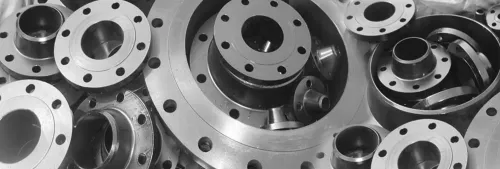
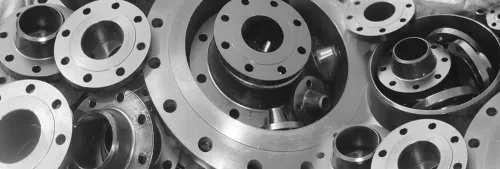
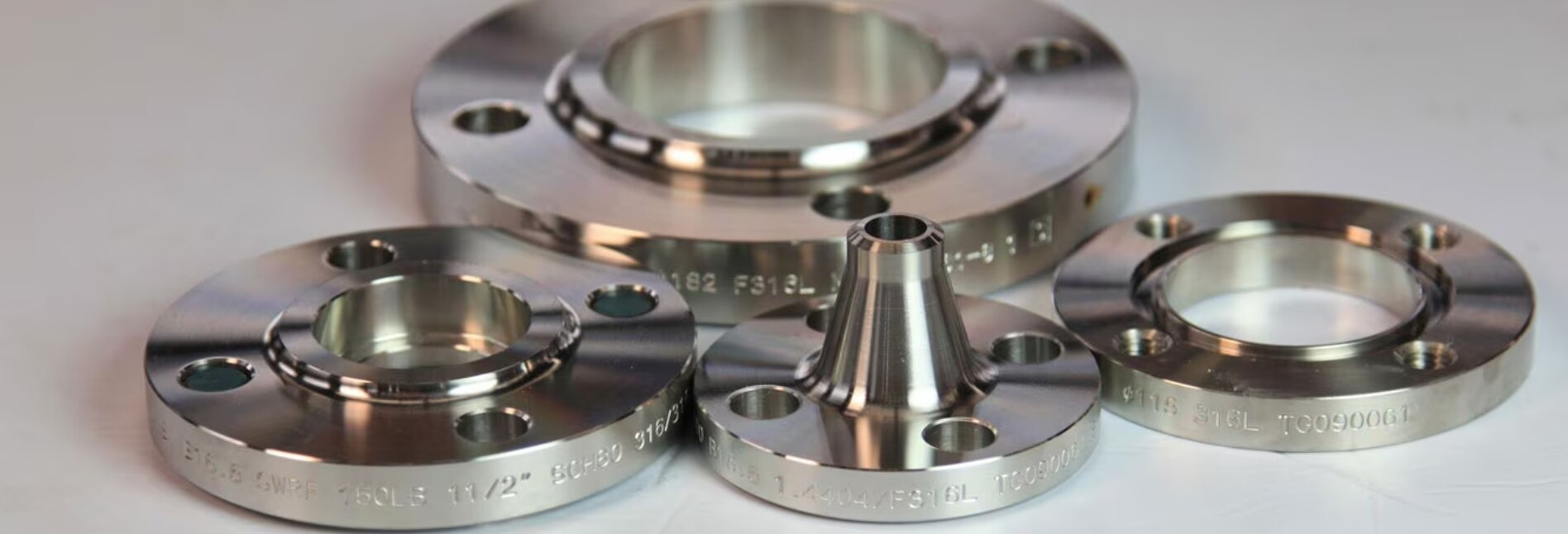
WNRF means weld-neck raised-face flange. It has a forged hub, a tapered neck that matches the pipe bore, and a raised gasket-seating surface above the flange face. The pipe is butt-welded to the neck, creating a continuous connection rather than the fillet-welded attachment used with a slip-on flange.
The tapered hub spreads stress gradually from the pipe to the flange body. That makes WNRF flanges suitable for process lines exposed to high pressure, high temperature, bending loads, vibration, and repeated thermal cycling. A weld-neck flange with another facing is not automatically a WNRF flange; “raised face” identifies the gasket surface.
1. Place WNRF flanges at pump suction and discharge connections, pressure vessels, heat exchangers, process headers, and severe-service piping where joint integrity and alignment matter.
2. Confirm the flange belongs to the plant’s piping class. ASME B16.5 and ASME B16.47 drilling dimensions do not interchange with EN 1092-1, DIN, or JIS systems. Check the bolt-hole count, bolt-circle diameter, hole diameter, outside diameter, and thickness before fabrication.
3. Match the flange bore and weld end to the pipe outside diameter and schedule, then confirm the welding procedure, alignment controls, and required examination. A search for “order wnrf flanges for process plants in mumbai” becomes actionable only when those details accompany the inquiry.
Choose the right flange type for the service
Choose a WNRF flange when the line faces pressure, temperature, bending loads, or repeated thermal cycling. Its tapered hub transfers stress gradually into the pipe, making it more suitable for pump connections, vessel nozzles, heat exchangers, and process headers than a slip-on flange.
| WNRF flanges | Main advantage | Appropriate choice |
|---|---|---|
| Weld-neck raised-face | Tapered hub and controlled bore reduce stress concentration | High-pressure, high-temperature, cyclic, or critical process lines |
| Slip-on raised-face | Lower purchase and fabrication effort | Moderate-service utility lines where fatigue and alignment demands are limited |
| Threaded or socket-weld | Avoids a full butt weld at the pipe joint | Small-bore lines or services where the piping specification permits them |
| Weld-neck ring-type joint | Metal ring seals at high pressure and temperature | ASME RTJ systems; not interchangeable with raised-face gaskets |
A raised face does not automatically establish gasket compatibility. Match the flange to the specified spiral-wound, ring-type-joint, or other gasket, then confirm facing finish, bolting, and any insulation kit.
Do not substitute drilling systems. ASME B16.5 and ASME B16.47 do not interchange with EN 1092-1, DIN, or JIS. Before fabrication, verify bolt-hole count, bolt-circle diameter, hole diameter, outside diameter, and thickness against the piping class.
For sour service, give the supplier the H2S partial pressure, temperature, and exposure condition. Check material and hardness against NACE MR0175/ISO 15156, not merely the grade name. A process plant supplier should also confirm the specified ASTM A105 or ASTM A182 grade and heat-treatment condition.
Specify size, class, facing, bore, and dimensional standard
A nominal pipe size alone cannot produce a reliable quotation. Title the inquiry “wnrf flange order in mumbai,” but make the technical line identify the connected pipe, pressure rating, facing, and governing dimensional standard.
1. State quantity and nominal pipe size (NPS), such as NPS 4, together with the outside diameter, wall thickness, or pipe schedule. The flange bore must match the pipe, or the butt-weld preparation can leave an internal lip or mismatch.
2. Specify the pressure class—Class 150, 300, 600, or 900—and the dimensional standard. Name ASME B16.5 for its covered size range, or ASME B16.47 Series A or Series B for large-diameter flanges. Do not substitute EN 1092-1, DIN, or JIS drilling.
3. Write “raised face” and state the required facing finish. Identify the gasket type and standard, such as spiral-wound, because gasket selection does not follow from raised-face wording alone.
4. Add the material grade, such as ASTM A105, ASTM A182 F304, or ASTM A182 F316, plus bolt material, coating, and any insulation kit. Include coating or preservation requirements.
5. Request the delivery point, inspection documents, and marking requirements. List EN 10204 3.1 certification, heat-number traceability, dimensional and visual reports, and PMI or NDE reports when the piping class requires them.
Before release, compare bolt-hole count, bolt-circle diameter, hole diameter, outside diameter, thickness, and bore with the approved piping-class drawing. A correct class with the wrong drilling pattern remains unusable.
Match the flange to materials, welding, and fabrication controls
Start with the pipe and service, not the supplier’s default grade. Match the flange to the pipe material, NPS, outside diameter, bore, temperature, pressure, corrosion allowance, and thermal-cycle duty. ASTM A105/A105M covers forged carbon-steel flanges; ASTM A182/A182M covers forged alloy and stainless grades such as F304 and F316.
The pipe, gasket, and bolting must remain compatible.
For sour service, ordinary stainless or carbon steel is not sufficient. State the medium, H2S partial pressure, temperature, and exposure condition, then check the grade, hardness limit, heat treatment, and supplementary requirements against NACE MR0175/ISO 15156 when that project basis applies.
- Confirm the flange weld end matches the pipe wall and schedule, and verify the tapered hub dimensions.
- Require the applicable WPS and PQR, qualified for the material combination, thickness, welding process, and preheat or PWHT requirements.
- Define visual inspection, dimensional checks, and weld examination, such as radiography or ultrasonic testing, inside the inspection and test plan.
- Request heat-number traceability, a material test certificate, hardness results where specified, and required NDE reports.
ASME B16.5 and B16.47 are not interchangeable with EN 1092-1, DIN, or JIS drilling. Before fabrication release, check bolt-hole count, bolt-circle diameter, hole diameter, outside diameter, thickness, raised-face dimensions, and bore against the piping class.
If you order wnrf flanges for process plants in mumbai, put every control in the purchase line item rather than accepting “standard WNRF.”
Send a Mumbai inquiry that produces an usable order
Use “WNRF flange order in Mumbai” as the inquiry subject, then make each line item unambiguous: quantity, NPS, ASME Class 150/300/600/900, ASME B16.5 or B16.47 series, material grade, bore or pipe schedule, raised-face finish, gasket and bolting scope, preservation, and delivery point.
State ASTM A105/A105M or the exact ASTM A182/A182M grade, heat-treatment condition, and supplementary requirements. For sour service, include H2S partial pressure, temperature, exposure condition, and the project’s NACE MR0175/ISO 15156 requirement.
- Request a quotation with unit price, lead time, packing method, country of origin, and deviations listed separately.
- Require an EN 10204 3.1 certificate, heat-number traceability, dimensional report, visual and marking records, and PMI or NDE reports where the piping class specifies them.
- Tell the wnrf flanges process plant supplier that no substitution between ASME B16.5, ASME B16.47, EN 1092-1, DIN, and JIS drilling is acceptable.
NEXUS FORGE INDUSTRIES can be evaluated as a wnrf flange manufacturer in mumbai only against these written requirements, not a generic catalogue description.
| Check | Evidence to compare | Receiving action |
|---|---|---|
| Dimensions | Bolt-hole count, bolt-circle diameter, hole diameter, outside diameter, thickness, bore | Measure against the piping class before fabrication |
| Material | Heat number, grade, condition, 3.1 certificate | Match markings to the certificate and quarantine mismatches |
| Condition | Raised face, bore, weld-neck taper, coating, packing | Inspect for damage, corrosion, dents, and contamination before release |
Related service
FLANGES FLANGES Nexus Forge Industries – Stainless Steel Flanges Manufacturer & Supplier Nexus Forge Industries is a trusted manufacturer, supplier, and exporter of... |
Frequently asked questions
What is a WNRF flange and where does it belong?
A WNRF flange is a weld-neck raised-face flange with a tapered hub. The pipe is butt-welded to its neck, making it suitable for process-piping connections that require controlled stress transfer and reliable alignment.
How do I choose the right flange type for process-plant service?
Compare weld-neck, slip-on, socket-weld, threaded, lap-joint, and blind flanges against pressure, temperature, cyclic loading, corrosion, inspection access, and the welding method required.
What details belong in a WNRF flange order?
State nominal pipe size, pressure class, facing, bore, dimensional standard, material grade, schedule, wall thickness, end preparation, gasket requirements, testing, documentation, and quantity.
Which standards should I name in a Mumbai WNRF flange inquiry?
Name the governing standards, such as ASME B16.5 for common NPS flanges, ASME B16.47 for larger diameters, ASME B16.25 for butt-welding ends, and the specified material standard.